The Sikh faith was guided by ten human Gurus over a period of nearly 240 years (1469–1708). Each Guru enriched the faith, adding to the social and spiritual foundation of the community, before the Guruship was famously passed to the Guru Granth Sahib Ji as the eternal Guru.
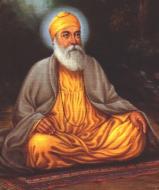
Guru Nanak Dev Ji
1469 – 1539Guru Nanak Dev Ji, founder of the Sikh faith, was born on April 15, 1469. He preached equality for all, regardless of caste, creed, or gender, and emphasized a simple life of truth, honest work, and meditation. He rejected empty rituals and undertook four major spiritual journeys (Udasis) across Asia and the Middle East to spread his radical message of Oneness and humanity.
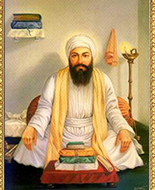
Guru Angad Dev Ji
1504 – 1552Originally named Bhai Lehna, he became the second Guru after his total devotion to Guru Nanak. He is credited with standardizing the Gurmukhi script, making the hymns of the Gurus accessible to the common people. He also promoted physical fitness and established wrestling arenas (Mall Akhara) alongside spiritual centers.
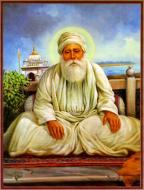
Guru Amar Das Ji
1479 – 1574He strengthened the institution of Langar (free community kitchen), decreeing that "Pehle Pangat, Pache Sangat" (first sit in the row to eat, then seek the company of the Guru), ensuring even emperors sat with commoners. He strongly advocated for women's rights, banning the practice of Sati (widow burning) and Purdah (veiling).
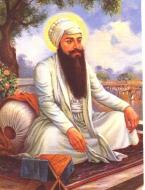
Guru Ram Das Ji
1534 – 1581Known for his humility and selfless service, he founded the city of Amritsar (Pool of Nectar), which became the spiritual center of Sikhism. He composed beautiful hymns (Laavan) that are recited during the Sikh wedding ceremony (Anand Karaj), sanctifying the union of two souls.
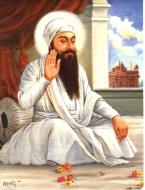
Guru Arjan Dev Ji
1563 – 1606The fifth Guru compiled the Adi Granth (the first Sikh scripture) and completed the construction of the Harmandir Sahib (Golden Temple). He became the first Sikh martyr, sacrificing his life to uphold the freedom of worship, calmly accepting torture by the Mughal Emperor Jahangir.
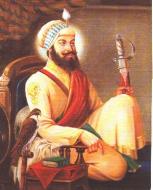
Guru Hargobind Sahib Ji
1595 – 1644He introduced the concept of Miri and Piri (temporal and spiritual authority), wearing two swords. He established the Akal Takht (Throne of the Timeless One) facing the Golden Temple, signifying that Sikhs must be saints at heart but soldiers when needed to protect the weak.
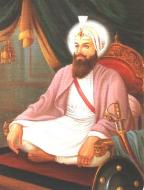
Guru Har Rai Sahib Ji
1630 – 1661Known as the "Tender-Hearted Guru," he focused on healing and medicine. He maintained a large Ayurvedic herbal garden and dispensary at Kiratpur Sahib, providing free care to all. Despite maintaining a strong cavalry, he never engaged in battle, focusing on peaceful consolidation.
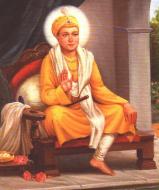
Guru Har Krishan Sahib Ji
1656 – 1664Known as the "Child Guru," he assumed the Guruship at the age of five. He amazed everyone with his wisdom and spiritual depth. During a smallpox epidemic in Delhi, he served the sick personally, contracting the disease himself and passing away at a young age, demonstrating ultimate compassion.
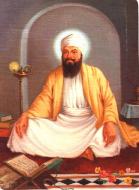
Guru Tegh Bahadur Sahib Ji
1621 – 1675He sacrificed his life to protect the rights of Kashmiri Brahmins to practice their faith, setting a universal precedent for religious freedom. He was publicly beheaded in Delhi by Emperor Aurangzeb for refusing to convert to Islam, asserting that no one should be forced to change their beliefs.
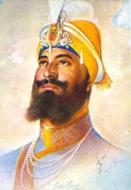
Guru Gobind Singh Ji
1666 – 1708The tenth master created the Khalsa Panth in 1699, giving Sikhs a distinct identity. He was a warrior, poet, and philosopher who sacrificed his four sons for righteousness. Before his passing, he declared the Sri Guru Granth Sahib Ji as the eternal Guru, ending the line of human Gurus.
The Eternal Guru
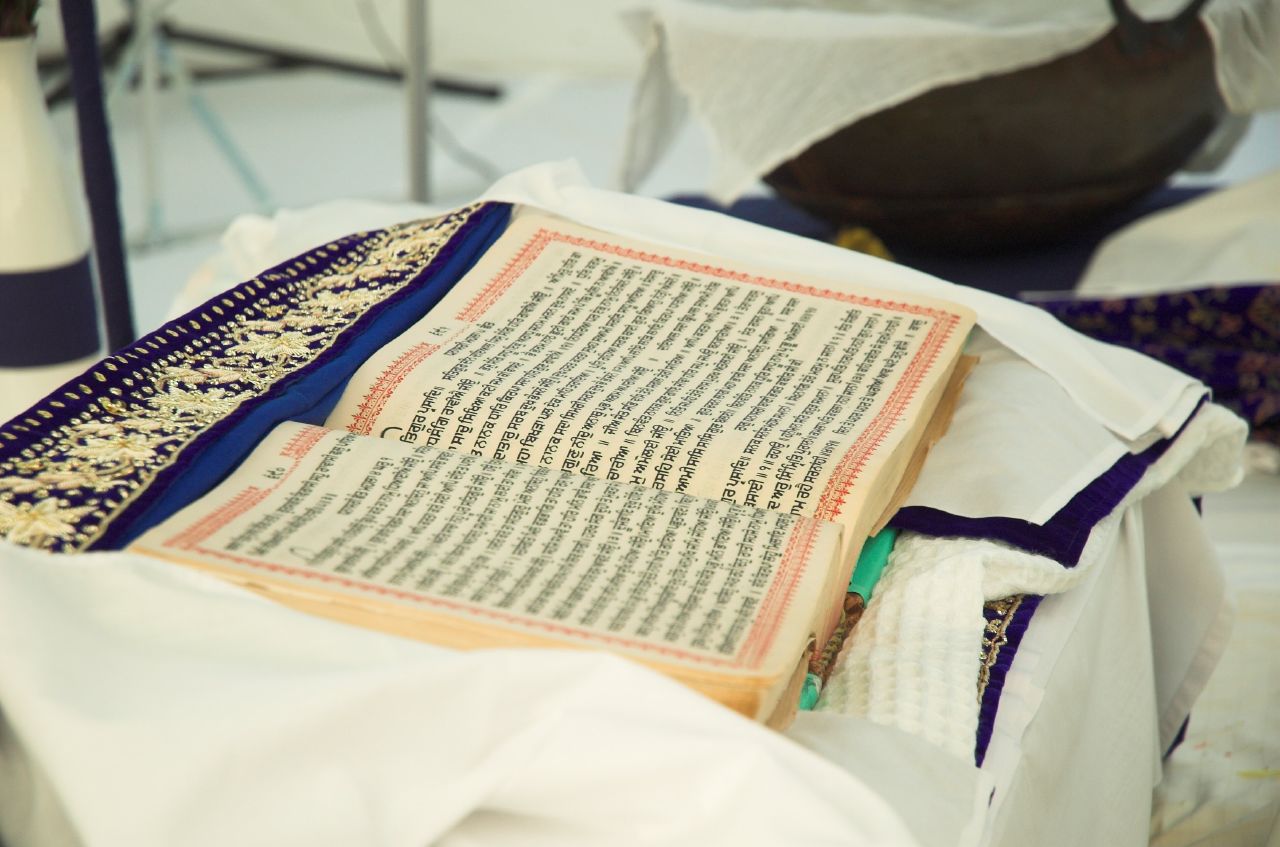
Sri Guru Granth Sahib Ji
The living embodiment of the Gurus' teachings and the spiritual guide for all Sikhs forever.